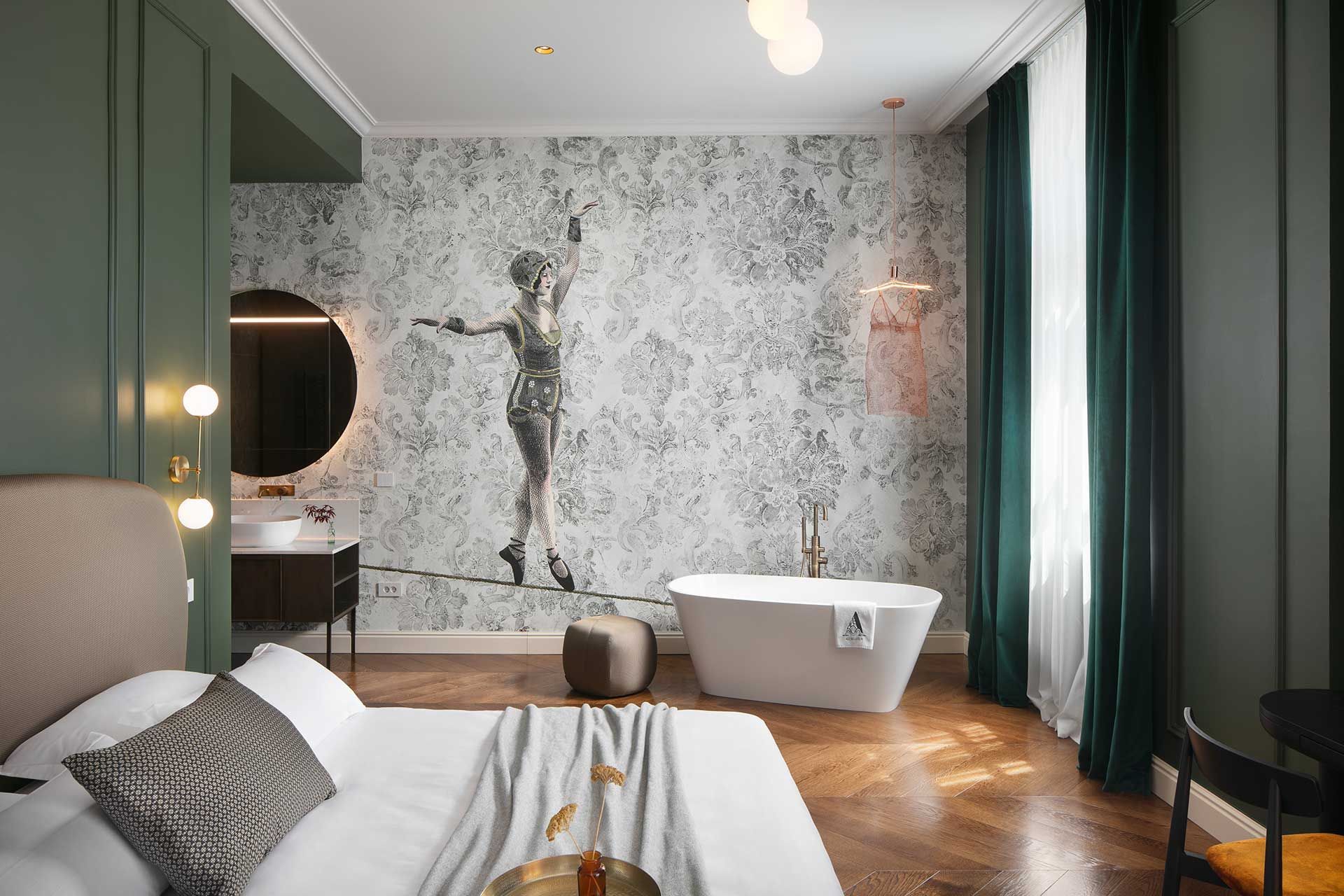
A hotel room can offer more than a comfortable bed and a place to leave a suitcase. It can establish a relationship with its surroundings, giving a guest a sense of the building, the city and the ideas behind its design. At Almayer Art & Heritage Hotel in Zadar, individuality is part of that relationship.
The boutique hotel brings together 16 individually designed double rooms across two neighbouring restored heritage buildings. Contemporary design, local history and art provide a shared identity, while each room offers its own interpretation of that identity. The result is a stay where character matters as much as consistency.
Heritage gives individuality a foundation
Historic buildings bring a different starting point to hotel design. Rather than beginning with an empty site and a repeated floor plan, restoration involves working with an existing place and its architectural identity.
At Almayer, the setting in Zadar’s historic centre makes that connection particularly meaningful. The hotel belongs to the city around it; its heritage buildings are part of the experience, not simply a backdrop.
This helps explain why individually designed rooms feel appropriate here. Uniformity is not the only way to create a coherent hotel. A common design approach can connect different spaces without making them interchangeable. Each room can belong unmistakably to Almayer while retaining an identity of its own.
Contemporary design creates a dialogue with the past
Combining heritage and contemporary design requires balance. An interior that relies entirely on historical references can feel like a reconstruction, while one that ignores its setting may lose the qualities that make the building distinctive.
Almayer’s approach brings contemporary design into conversation with local history and art. That combination allows the rooms to feel relevant to present-day guests without separating them from their surroundings.
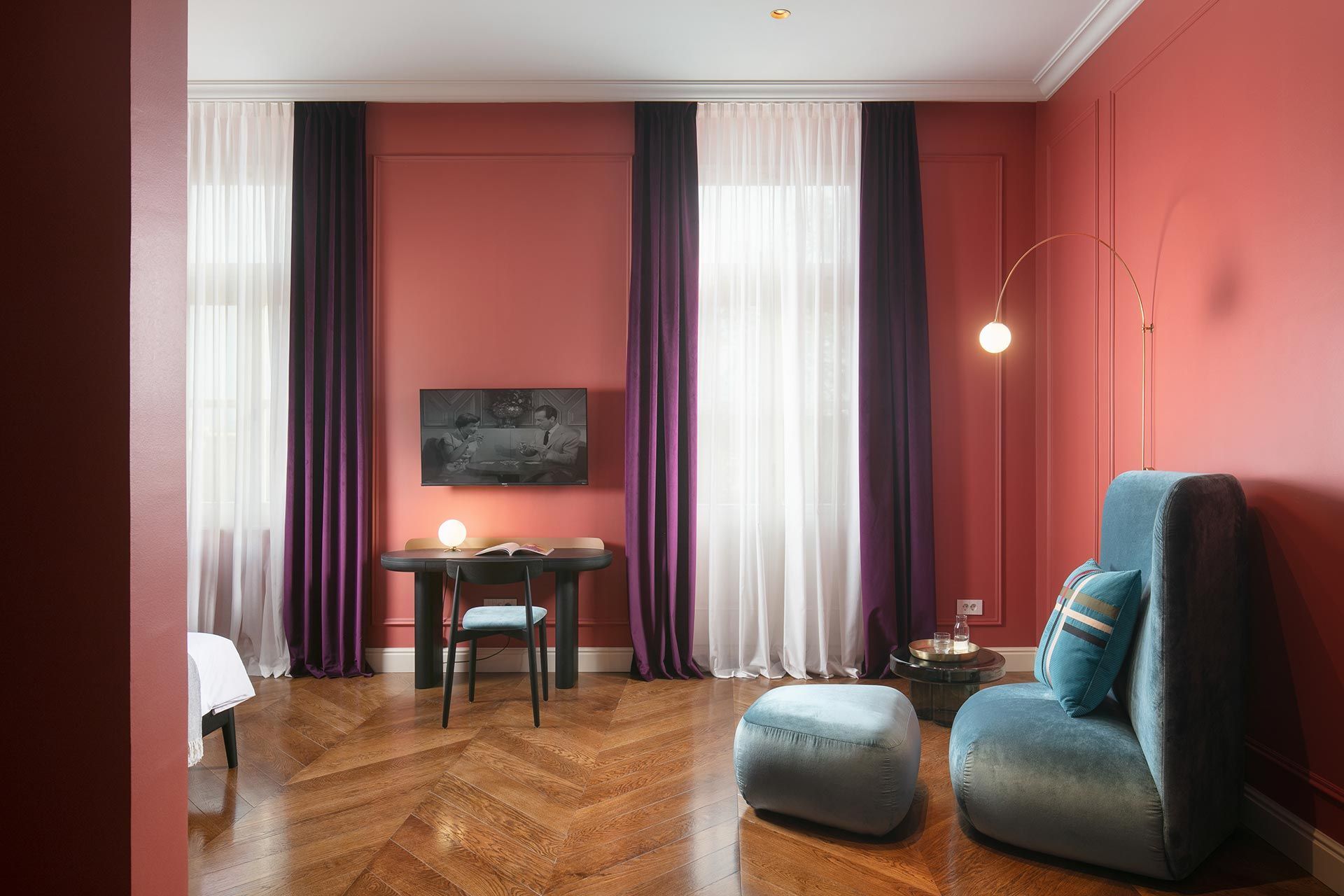
Character emerges through relationships: how furniture occupies a space, how colour influences its mood, and how individual elements work together. A room does not need an abundance of decoration to feel distinctive. Sometimes, a carefully judged contrast gives an interior more personality than a collection of statement pieces.
Art makes the hotel more than a setting
Art is central to Almayer’s identity, extending beyond the idea of decoration selected to fill a wall. The hotel’s in-house sales gallery hosts exhibitions by Croatian and international artists, giving creative expression a presence within the property.
That wider artistic context changes how the interiors can be experienced. Guests encounter a hotel where visual culture is part of its purpose, alongside hospitality and heritage.
Within this setting, individual room design feels like a natural extension of the hotel’s identity. There is no need for every space to repeat the same visual formula. Cohesion comes from a shared sensibility, leaving room for different moods and impressions.
A room’s character is also about how it feels
Distinctive design is not only something a guest notices on arrival. It also shapes quieter moments: waking up, getting ready to explore Zadar or returning after a day in the historic centre.
The relationship between a bed and the surrounding space, the effect of lighting, and the visual balance of an interior all influence how a hotel room feels. These details matter because guests inhabit a room rather than simply look at it.
Individuality should therefore be understood as more than visual difference. It is also the impression a space leaves over time. One guest may respond most strongly to an artistic detail; another may remember the overall atmosphere. The same design can invite different personal connections.
An intimate hotel allows details to matter
With 16 double rooms, Almayer offers a scale that supports its boutique identity. The experience centres on a relatively small collection of individually designed spaces rather than a large inventory of repeated interiors.
The wider setting adds another dimension. Corte Restaurant and its hidden green garden provide a distinct atmosphere within the hotel, complementing the heritage buildings and artistic focus.
A guest moves between these settings throughout a stay: the private space of a room, the restaurant’s intimate surroundings and the historic streets beyond the hotel. Each contributes something different. Back in the room, Almayer’s shared identity becomes a more personal experience, shaped by the particular space the guest calls their own.