Zadar is one of those rare coastal cities where a full day can feel rich, varied, and unhurried without needing a car, taxi, or even public transport. The old town of Zadar sits on a compact peninsula, which means Roman ruins, medieval churches, sea views, museums, café terraces, and sunset spots are all close enough to explore on foot. For travelers who want to slow down and experience the city properly, walking is not a compromise here. It is the best way to understand its character.
Start in Zadar old town
The natural starting point is Zadar Old Town, the historic heart of the city and the area where layers of history appear almost side by side. Venetian walls, Roman remains, stone streets, and elegant squares create a setting that feels both monumental and lived in. Walking through the old center is not only a practical way to get around, but also a key thing to do in Zadar in its own right.
Early morning is especially rewarding. The lanes are quieter, the light is softer, and the architecture stands out more clearly before the busiest part of the day begins. Because distances are short, it is easy to wander without checking a map constantly.
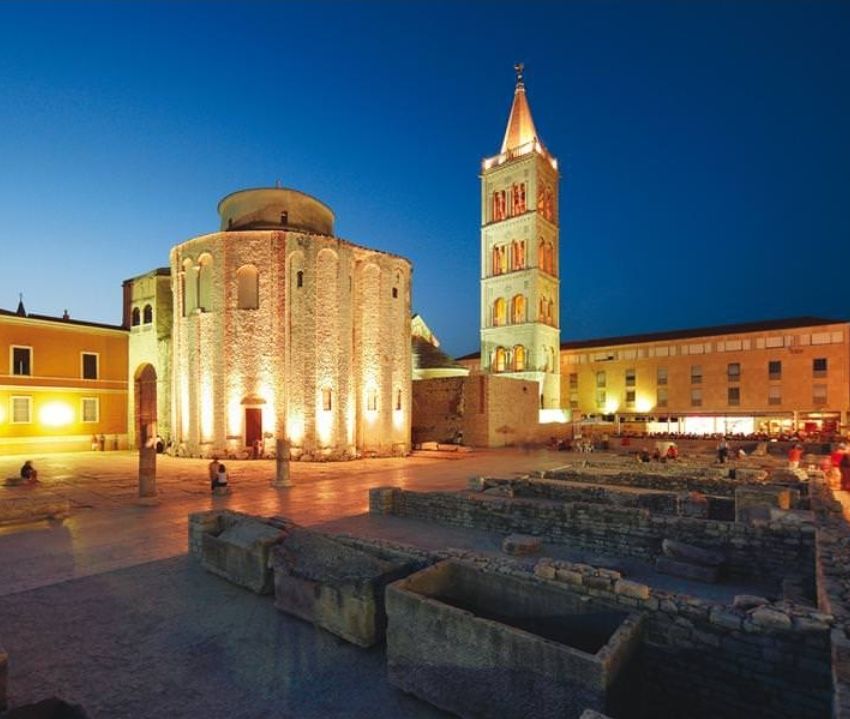
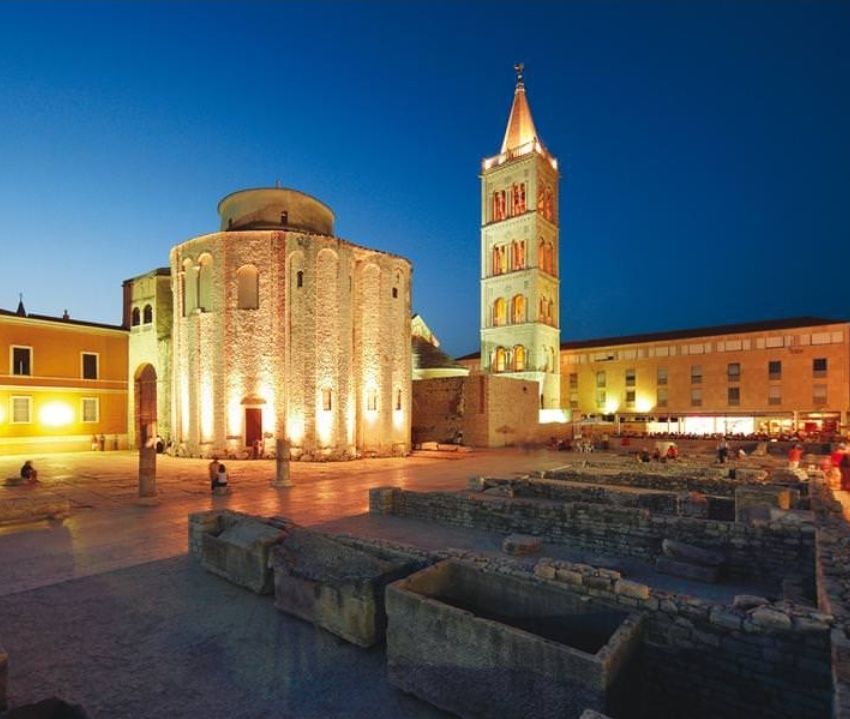
See the Roman Forum and the Church of St. Donatus
Among the most iconic places in the city, the Roman Forum reveals Zadar’s ancient roots. Built during the Roman era, it remains one of the most impressive historical sites on the Dalmatian coast. Fragments of columns, old paving stones, and open views across the square give this part of town a strong sense of continuity. It is one of the essential answers to the question of what to do in Zadar if you are interested in history.
Right beside it stands the circular Church of St. Donatus, a pre-Romanesque landmark dating back to the early medieval period. Its unusual form makes it one of the most recognizable buildings in Croatia. Even from the outside, it leaves a lasting impression, especially when seen against the remains of the forum. This pairing of Roman and medieval heritage in one place is part of what makes Zadar feel so distinctive.
Climb the bell tower for a wider view of the city
Next to the historic religious complex, the bell tower of the Cathedral of St. Anastasia adds a vertical perspective to your walk. After exploring streets, squares, and waterfront corners at ground level, climbing higher changes your understanding of the town completely. Rooftops, church domes, defensive walls, and the blue edge of the sea come together in a single panorama.
For many visitors, this is one of the most memorable things to do in Zadar because it brings the whole peninsula into view. You can appreciate how compact the old center is and how closely the urban landscape connects to the water and nearby islands.
Walk to the Sea Organ and Greeting to the Sun
No visit to Zadar feels complete without time by the waterfront, where the city’s best-known modern attractions create a different mood from the old stone core. The Sea Organ is both an artwork and a place to pause. Built into the steps at the edge of the sea, it uses the movement of waves to create changing sounds. The result is atmospheric rather than dramatic, and that subtlety is part of the appeal.
Nearby, the installation known as Greeting to the Sun adds light and geometry to the waterfront experience. Together, these landmarks show that Zadar is not only a historical town but also a city willing to interpret the sea in contemporary ways. Around sunset, this stretch becomes one of the most popular places in town, and for good reason. The combination of sound, open horizon, and changing sky turns a simple walk into a highlight of the day.
Pass through Land Gate and trace the old defenses
At the edge of the peninsula, the Land Gate marks one of the most important entrances to the historic center. This Venetian gate is more than a photo stop. It tells the story of Zadar as a fortified Adriatic city shaped by trade, conflict, and strategic geography. The sculptural details and strong stone form make it one of the finest architectural landmarks in the city.
From there, it is easy to continue along parts of the old walls and enjoy another side of the urban landscape. These defensive elements frame the old town and help explain how Zadar developed over the centuries. For travelers who enjoy walking with a sense of historical context, this area offers far more than a brief stop.
Enjoy the everyday rhythm of squares, cafés, and the market
Not every important thing to do in Zadar involves a major monument. Some of the best moments come from moving slowly between smaller places: a lively square, a coffee on a shaded terrace, a bakery stop, or a visit to the local market. The city rewards unstructured time.
This rhythm is part of the charm of the Dalmatian coast. Stone streets open into intimate courtyards, churches appear unexpectedly between houses, and the sea is never far away. Even a short walk can include architecture, local life, and changing views within minutes. That is why Zadar works so well for travelers who want variety without pressure.
Add a museum, gallery, or short harbor stroll
If you want to shape the day around culture, the compact center makes that easy as well. Small museums and gallery spaces fit naturally into a walking route, including places connected to the city's art catalogue, allowing you to move between major landmarks and quieter indoor stops without losing momentum. This is especially useful in the warmer part of the day, when a cool interior can balance time spent outdoors.
A harbor stroll also adds another dimension to the city. Looking back toward the peninsula from the water’s edge reveals how the old town sits within the wider coastal setting of Croatia, connected visually to the mainland and outward to the islands. Even if you are saving a larger day trip for another time, the waterfront already gives a sense of Zadar’s relationship with the sea and the broader Adriatic landscape.
Why walking is the best way to experience Zadar
What makes Zadar especially appealing is not only the number of sights, but how naturally they connect. The Roman Forum, the Sea Organ, the Land Gate, the bell tower, historic churches, and the relaxed public spaces of the old center can all fit into one walkable route. There is no need to rush from one attraction to another because the city itself creates the experience in the spaces between them.
For travelers choosing where to stay, being based in the historic center makes that experience even smoother. Whether you are exploring local accommodation or planning other experiences, when the best of the city is just outside the door, it becomes easy to step out for an early walk, return for a break, and head back into town for the evening light along the sea. In a place as compact and atmospheric as Zadar, walking distance is not just a convenience. It is part of the destination itself.